
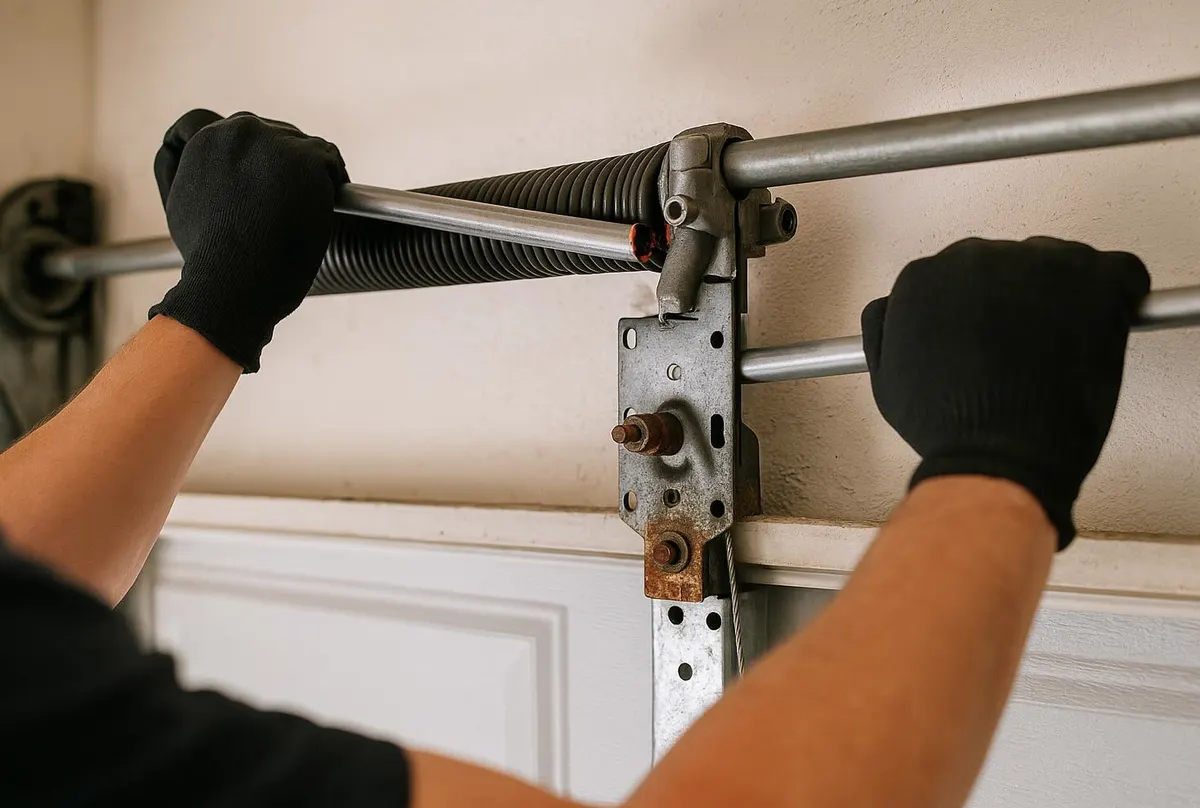
You hit the opener button on your way out and the door groans halfway up, hesitates, then jerks the rest of the way. Or it closes with a shudder instead of a smooth glide. Maybe you notice a thin orange line of rust creeping along the bottom track that wasn't there last spring. None of that means the door is broken yet, but it means it's been sitting through another hot, salty, humid season without any attention — and in the Keys, that adds up fast.
A garage door here works harder than almost anywhere else in the country. Salt air pits hardware. Humidity swells wood panels and door seals. Afternoon downpours push water at the bottom seal. And a hurricane season full of pressure changes and wind-load stress can loosen hardware you'd never think to check. The good news is that most of what keeps a door reliable through all of that is a twenty-minute routine you can do once a season, right now, before the drier winter months settle in.
Tools You'll Need
- Stepladder
- Adjustable wrench or a socket set
- Work gloves
- Silicone-based garage door lubricant (not WD-40 — it doesn't hold up long in humid air)
- A couple of clean rags
- A flashlight
- A spare piece of 2x4 or similar scrap wood
The 20-Minute Routine
- Walk the tracks with a flashlight. Look for rust streaks, pitting, or white salt residue along the vertical and horizontal tracks, especially if your garage faces the water or gets ocean breeze. Light surface rust is normal; flaking rust or a track that looks bent or twisted is not.
- Tighten the visible hardware. Using your wrench or socket set, snug up the bolts on the track brackets and the hinges between panels. Vibration from the opener and seasonal humidity swelling and shrinking the door panels will work bolts loose over months, even if nothing feels wrong day to day.
- Check the balance. Pull the manual release cord to disconnect the opener, then lift the door by hand about halfway. Let go. A properly balanced door will stay put. If it drifts down or slams shut, the springs are carrying too much or too little tension — more on that below.
- Lubricate the moving parts. Apply silicone-based lubricant to the rollers, hinges, and the track itself (a light coat, not a soak). This matters more here than in drier climates, since humidity causes metal-on-metal parts to bind and rust faster. Wipe off excess with a rag so it doesn't attract dust and grit.
- Inspect the weatherstripping. Run your hand along the bottom seal and side seals. If the rubber is cracked, flattened, or pulling away from the frame, afternoon downpours will keep finding their way under the door. Weatherstripping is cheap and most homeowners can pry out the old strip and press in a new one without any special tools.
- Wipe down the tracks. Salt air leaves a film even where you can't see rust yet. A damp rag run along the inside of both tracks removes grit and residue that would otherwise grind against the rollers.
- Test the auto-reverse safety feature. Lay the 2x4 flat on the ground where the door would close. Reconnect the opener and run the door closed. It should touch the wood and reverse immediately. If it doesn't, stop using the opener until that's fixed — this is a safety issue, not a maintenance one.
Where to Stop and Call a Technician
A few things on a garage door should never be handled by a homeowner, no matter how capable you are with a wrench:
- Springs and cables. These are under extreme tension and are involved in the vast majority of serious garage door injuries. If your balance test showed a spring problem, that's a call, not a DIY fix.
- Bent or badly rusted tracks. Forcing a track back into alignment yourself can throw the whole door off and cause it to jump the track entirely.
- Wind-load bracing and hardware. If your door has reinforcement rated for storm conditions, that bracing needs to stay exactly as engineered. Adjusting or removing it yourself can compromise how the door performs in high wind.
- Opener circuit or sensor issues beyond a simple auto-reverse test, especially anything involving wiring.
When to Call Islamorada Overhead Door Co
If your balance test felt off, if you spotted a bent track, or if the door has been louder or slower for more than a week, it's worth having us take a look before the issue turns into a stuck door on a stormy afternoon. We handle Garage Door Spring Repair for doors that are clearly under- or over-tensioned, and Off Track Door Repair when a track has shifted or bent from age, impact, or corrosion. We also offer Preventive Maintenance visits that go beyond the twenty-minute homeowner routine — checking opener force settings, inspecting wind-load hardware, and catching the kind of early rust or wear that's easy to miss from a stepladder.
If your garage door needs more than a tune-up, Islamorada Overhead Door Co serves Islamorada, Tavernier, Key Largo, Plantation Key, Layton, Marathon, Duck Key, and Key Colony Beach. Give us a call and we'll get a technician out to look at it — we show up when we say we will.